
Do Dogs Have Trauma-Activated Nightmares?
By Dr. Laura Donaldson, PhD, CDBC, KPA-CTP.
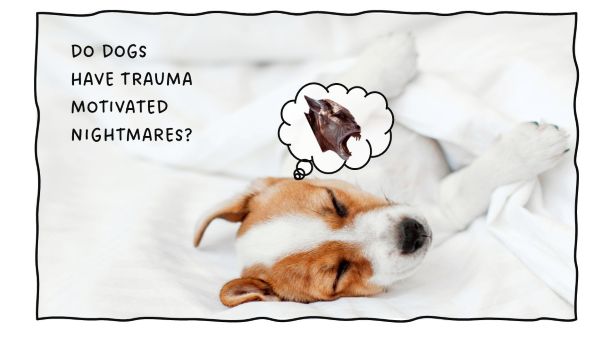
One of my favorite pastimes is observing my dog (a seventy-pound Golden Retriever), especially when he is sleeping. Over the years, this has given me a deep sense of safety and ease and it has become one of my most important meditative practices, especially during challenging times. While watching, I sometimes notice my dog dreaming. How do I know he is dreaming? Because he frequently acts them out by running in place (vigorously moving his legs while lying down) as well as whining and barking, most likely at the squirrel he was trying to catch. However, it wasn’t until I began working with traumatized dogs that I encountered dogs having nightmares. The 1721 Universal Etymological Dictionary charmingly defines nightmares as a “disease when a man in his sleep supposes he has a great weight laying upon him.” A more contemporary definition characterizes them as frightening dreams resulting in “feelings of terror, fear, distress, or anxiety (Edwards, 2015).” While most of us experience nightmares only occasionally, trauma survivors know them as frequent companions and disruptors of REM sleep.*
Trauma-activated nightmares involve recurring and involuntary re-experiencing of the original traumatic stress and research suggests that this facilitates a survivor’s emotional processing of the event (Simos and Berle, 2023). While there is a paucity of information about how this works in canine survivors, all the data as well as anecdotal evidence suggests that dogs also re-experience trauma through the phenomena of nightmares.
A DOG HAVING A NIGHTMARE
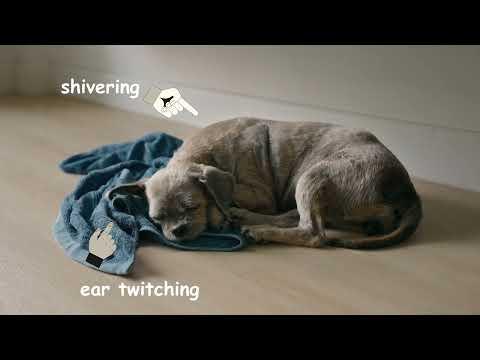
(Video credit, Puno-Shutterstock; if you are having problems accessing the video, click on the YouTube link to play it directly: https://youtu.be/nBuZ4DxskRg)
In this video of a sleeping dog having a very intense dream, the clues that this is a nightmare come from the dog’s body language. The canine body language of nightmares includes body activity like running in place, agitation, vigorous eye movement and even vocalizations like screaming. For the dog in the video, the intense and continuous shivering conjures an emotional state of fear and anxiety. At 10.42 seconds into the video, viewers should note the dog tucking its tail—a behavior communicating fear as well as stress whether a dog is awake or asleep. Was this dog having a nightmare? Lacking verbal corroboration, it is impossible to answer this question with a definitive “yes,” but the sleeping animal’s negative body language strongly implies the “recurrent and involuntary intrusive (Simos and Berle, 2023)” presence of a trauma-activated nightmare.
The question then becomes what, if anything, one should do when a dog re-experiences traumatic stress via dreaming? I strongly recommend that anyone whose dog consistently presents with bad dreams consult a trauma informed behaviorist. Indeed, the only permanent, long-term solution for nightmares is healing the larger traumatic injury activating them. In the shorter term, however, I want to suggest some practical guidelines for engaging intensely negative dreams in a responsible manner.
- Contrary to popular advice, you should never try to wake or touch a dog who is having a nightmare because doing so can cause dogs to startle out of sleep. Startling out of sleep is a hypervigilant canine fight-or-flight reflex and poses substantial risk for the human sustaining a bite.
- Investigate any possible contributing medical conditions like pain, dental disease, irritable bowel syndrome as well as chronic health problems like diabetes (Chessher, 2025). In addition to each condition’s particular effects, all of them are known disruptors of healthy sleep cycles in both humans and dogs.
- Ensure that your dog is getting an adequate amount of restful sleep, including a deep REM cycle, by providing them with a predictable, low arousal bedtime ritual like having a stuffed Kong (repetitive licking releases endorphins) and going to bed at a similar time every night.
- Finally, if you observe your dog having nightmares, never accept it as the status quo.
While this is not an exhaustive list, it does offer suggestions that anyone can immediately implement for their dogs. Always remember that a dog having nightmares is a dog whose emotional wellbeing urgently needs loving attention. And, as always, Keep the Canine Faith!
*REMis the human and canine sleep cycle in which dreaming occurs.
Dr. Laura Donaldson, PhD, is a Professor Emeritus from Cornell University located Ithaca, New York, United States. She is an award-winning writer on dog behavior who has worked as a canine behavior specialist for 20 years. Laura is a Certified Dog Behavior Consultant (CDBC/IAABC) and a Karen Pryor Certified Training Partner (KPA CTP). She is also a Certified Trauma Professional. She created the very popular program, Slow Thinking is Lifesaving for Dogs® and given a number of online webinars as well as conference presentations. Laura currently lives in upstate New York (northeastern US) with her husband, working Border Collies, three cats, an African Gray parrot named Obi and a small flock of Navajo Churro sheep.
References
Chessher, C. (2025). Do dogs have nightmares? Dogster Digital Edition. https://www.dogster.com/dog-health-care/do-dogs-have-nightmares
Edwards, S. (2015). Nightmares and the brain. https://hms.harvard.edu/news-events/publications-archive/brain/nightmares-brain.
Simos, A. and Berle, D. (2023). The phenomenology of nightmares in post-traumatic stress disorder and complex post-traumatic stress disorder. European Journal of Trauma & Dissociation, 7(3), 100335.


