
How Your Anxiety Affects Your Anxious Dog – And What To Do
By Alex Peacock.
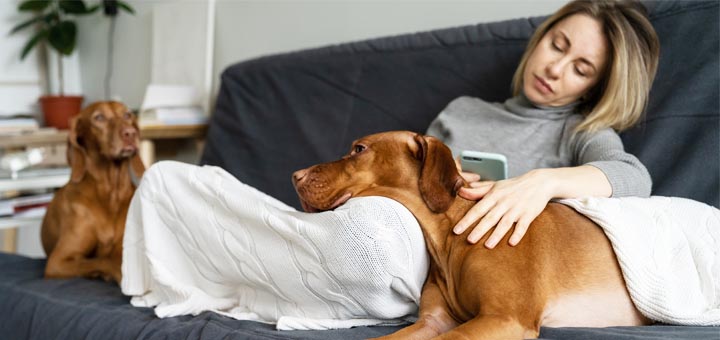
Living with an anxious dog can be a challenge—but when you’re also struggling with anxiety or emotional overwhelm, it can feel even more complicated. Dogs are incredibly intuitive animals. They pick up on our moods, energy, and even our body language more than we often realize. If your dog is anxious and you’re feeling stressed yourself, it can create a bit of a feedback loop where both of you end up feeding each other’s nerves.
But here’s the good news: you don’t have to be emotionally perfect to support your anxious dog. In fact, trying to chase perfection only adds more pressure. What matters most is learning how to ground yourself in the moment, build your confidence through proper technique, and take care of your own emotional health alongside your dog’s.
You Don’t Need to Be Perfect—Just Prepared
First, let go of the idea that you need to be calm all the time to help your dog. No one is calm 24/7, and your dog isn’t expecting perfection from you. What they need is clarity, consistency, and guidance. You can provide that—even if you’re a work in progress yourself.
Confidence doesn’t come from trying to fake calmness—it comes from knowing what to do. That’s where proper training techniques come in. When you know how to respond in moments of stress, you naturally feel more in control, and your dog picks up on that. Whether it’s how you guide them through a stressful walk, or how you handle separation anxiety at home, having a plan and practicing the techniques builds both your skillset and your confidence.
Calming Yourself is Part of the Work
Learning how to regulate your own nervous system is just as important as teaching your dog to regulate theirs. If you’re holding tension in your body, breathing shallowly, or carrying anxious thoughts, your dog is likely to feel it—even if you’re not saying a word.
Practices like deep breathing, grounding exercises, or simply taking a moment to pause before reacting can make a huge difference. These aren’t just tools for you—they help your dog, too. When you show up with more calm and clarity, your dog is more likely to feel safe and follow your lead.
Consider Getting Support
Just like our dogs benefit from working with a trainer, sometimes we benefit from working with a professional, too. Whether it’s a therapist, a coach, or even just a trainer who can support you through the process as much as your dog, getting help can be a game-changer.
It’s okay to admit when you’re feeling stuck, overwhelmed, or unsure. There’s no shame in needing support. In fact, it’s often the most responsible and loving thing you can do—for both you and your dog.
Sometimes We Get the Dog We Need
It’s a funny thing, but many people find that they don’t get the dog they thought they wanted—they get the dog they needed. An anxious dog can be a mirror for our own struggles, pushing us to grow in ways we never expected. And while that can be difficult, it can also be incredibly rewarding.
Working through your dog’s anxiety often means working through your own, and that journey can lead to greater confidence, calmness, and emotional resilience for both of you.
Your dog isn’t just a problem to solve—they’re a partner in your personal growth. And while the road may be bumpy at times, the destination is often deeper trust, connection, and healing on both ends of the leash.
Alex Peacock is a dog behavior modification trainer specializing in anxiety and fear related behaviors. He is passionate about helping people achieve a harmonious life with their dogs, and works virtually with clients from all over to achieve these goals. https://www.alexsdogtraining.com/anxiety-training


