
Tripod (Or “Tripaw”) Dog Resilience & Tui Na Support
By Amy Snow & Nancy Zidonis, Tallgrass Animal Acupressure Resources.
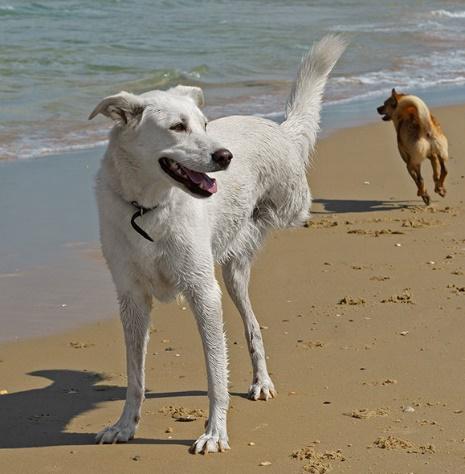
Rosie, a shepherd mix, was able to catch-up with a rabbit, run with her pack, and was as fleet-of-foot as any dog you have ever seen. The only difference between Rosie and the two other dogs in Rosie’s family was that she had three legs and the others had four. Rosie was found on the side of the road with a crushed left forelimb. A rescue organization had her leg amputated, she was adopted by people with a farm and Rosie never looked back. She has lived a full dog-life.
Dogs are amazingly resilient. The loss of a limb seems tragic to us, but most dogs adjust quickly and get on with their lives. When the amputation first occurs, it can take some time for you and your dog to make the necessary adjustments. Making sure your dog feels comfortable and safe is important. Your dog may experience “phantom” pains where the limb was – it’s as if his brain in searching for the limb and interprets the loss as pain. These pains will most like resolve as he heals.
Your holistic veterinarian will probably give you instructions for how to care for your dog after surgery. Often suggested is soft padding or bedding for him to lie down, a wrap that isn’t confining, like vet wrap, gentle exercise with good footing, and bodywork such as acupressure-massage, also known as the Chinese healing art Tui Na.
CALL OUT:
With forelimb amputation getting down from a raised surface may be difficult for the tri-paw dog because dogs care 60% of their weight on their forelimbs. Dogs with hind limb amputation can have difficulty with jumping up. These situations may require the use of a broad-band, comfortable harness for assistance.
As your dog heals and becomes more active, he will need to reestablish his sense of balance and build his strength in a way that does not compromise his other three legs. Physical therapists have excellent methods of helping dogs increase their activity incrementally and safely. Swimming, for instance, has proven to aid in gaining strength and confidence.
Acupressure-Massage / Tui Na Support
After the surgery as well as through the following years of your dog’s life acupressure-massage can help him heal more readily and feel more secure about his status as a “tri-paw” dog. During the initial healing phase, Tui Na, acupressure-massage, can enhance blood circulation to his entire body thus removing toxins and replenishing healthy cells needed to heal his wound and strengthen his three other limbs.
Three-legged dogs have to relearn balance, coordination, and build his muscles to accommodate the changes in his mobility. At first, it can be tricky for him to adjust, but he will figure it out and you can help him. Tui Na can support the dog so he can have a happy, vigorous life.
Tui Na Session & Technique
Tui Na is based on Traditional Chinese Medicine (TCM) and has been actively used for humans and animals for at least 3000 years. In TCM, when a limb is amputated, we work with the limb as if it were still there. That sounds a bit strange, but by assuming the missing limb is present we are helping the animal to balance his energy and circulation. Even without a leg, the dog is considered whole.
First, start by finding a comfortable and safe location for both of you. Most tri-paw dogs prefer soft floor coverings or beds on which to lie. Now think of how you want your dog to feel when you are offering him an acupressure-massage session. As an added benefit, spending time with your dog will give him a deeper sense of security and connection with you.
Technique
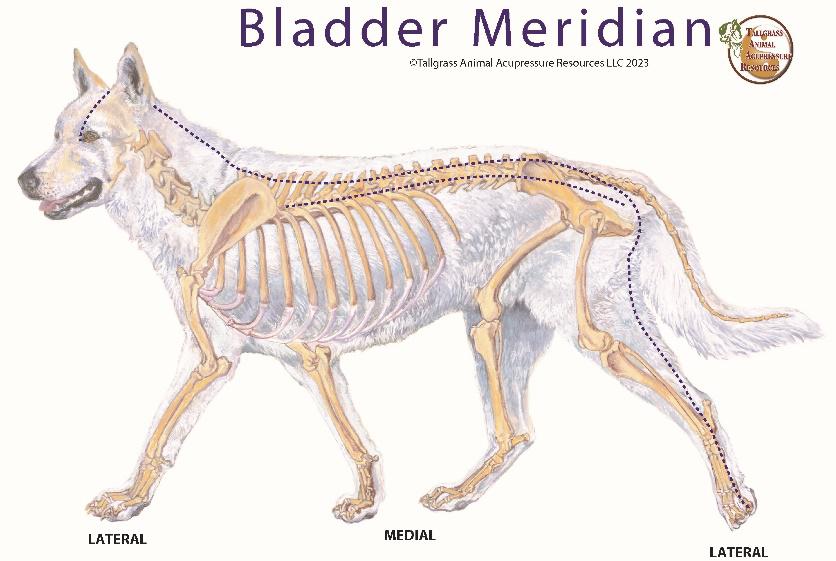
Place one hand on your dog where it can rest easily. With the heel of your other hand stroke from head across his back just to the side of the dog’s spine then down his leg to the outside of his paw. Repeat this stroking from head to paw three times on each side of your dog. Remember: In TCM, the missing limb is treated as if it still exists – pretend the limb and paw are there and follow through with your stroking as if they were there. This meridian helps dogs balance their energy, relax, and get use to intentional touch. Follow the chart above while tracing the Bladder meridian.
Second, once you have completed tracing of the Bladder meridian, simply massage around the nail-beds on each paw (including the missing paw). There are acupressure points on the sides of the nail beds that influence the energy and circulation throughout the dog’s body. These points help restore his balance, bring more blood to his muscles, tendons, and ligaments, enhance his absorption of nutrients, and provide a sense of grounding.
This Tui Na session can be offered every day after surgery for ten days to two weeks. After this initial healing time, go to every third day. And, as your dog gets back to being himself, offering him this session every five to six days will be beneficial for his long-term health and level of activity.
Dogs are marvelously optimistic creatures; not even an amputation gets in their way of living active, joyous lives. Provide a safe and loving environment for your tri-paw dog, but let him be a dog, that’s all he really wants.
####
SIDEBAR:
Suggestions for Caring for Your Tri-paw Dog:
- Keep him slim to avoid extra stress on his other limbs
- Provide soft bedding to minimize elbow irritation (hygroma)
- Keep his nails trimmed and paw pads healthy to enhance traction
- Exercise your dog regularly to maintain strength
- Avoid slippery surfaces
- Use raised food and water bowls
- Use fore or hind harnesses as needed
- Have fun together – live a dog’s life!
CALL OUT:
With forelimb amputation getting down from a raised surface may be difficult for the tri-paw dog because dogs care 60% of their weight on their forelimbs. Dogs with hind limb amputation can have difficulty with jumping up. These situations may require the use of a broad-band, comfortable harness for assistance.
Tallgrass Animal Acupressure Resources, your link to the ancient Chinese healing art and science of acupressure-massage for you and your horses, dogs, and cats. Every guardian can learn how to help their animal lead a full, happy, healthy long life. Tallgrass provides you with Online courses, Zoom tutorials, books, videos, and charts – all the resources you need care for your dog. Our website is content-rich with articles, blogs, and a pathway to learning, take a look: http//www.animalacupressure.com


