
Integrative Approach to Canine Diabetes

By Amy Snow & Nancy Zidonis, Tallgrass Animal Acupressure Resources.
Diabetes in our companion animals has reached epidemic proportions. Luckily, diabetic dogs can live long and almost normal lives. There may not be a cure for diabetes mellitus, but there are tried and true treatment options your holistic veterinarian and complementary therapy provider can offer.
Diabetes is a metabolic disease that is estimated to affect one out of every 200 dogs. This disease can occur at any age but tends to be more prevalent among animals between 7 to 10 years old. Other risk factors along with age are obesity, steroid medications, chronic or repeated pancreatitis, gender (females are twice as prone to be diabetic than males), and genetics are considered to play a big part in the risk of diabetes.
Nature of Diabetes
Glucose, a form of sugar, is the essential energy source for the body’s cells. Insulin, a hormone produced by the pancreas, controls the glucose levels in the animal’s blood stream. Insulin is also needed to transport the glucose from the blood to nourish and provide energy to the body’s cells. If there’s not enough insulin, too much glucose accumulates in the blood, causing hyperglycemia.
When glucose in the blood is elevated, insulin is not functioning properly and thus not transmitting glucose to the cells. The cells become starved while the sugars are flooding the organs, potentially leading to organ damage. Additionally, the glucose overflows into the urine draws a large quantity of body fluid, which is why diabetic animals often drink copious amounts of water and urinate frequently. Excessive urination is a significant tell-tale sign of diabetes. Other clinical indicators of diabetes include:
- Weight loss (even with increased consumption)
- Loss of appetite
- Fatigue or extreme lethargy
- Frequent infections
- Vomiting
- Cataracts /cloudy eyes
When you are aware of any of these signs of diabetes, it is imperative that you consult your holistic veterinarian immediately. Once the tests determine that your dog is diabetic, coming up with a strategy to support your pet’s long-term health is the next step.
This is the perfect opportunity to develop an integrated health plan. Follow your veterinarian’s recommendations for ongoing care while supporting your dog’s health and wellness program with proper nutrition, appropriate exercise, and acupressure sessions.
Chinese Medicine
Acupressure is based on Traditional Chinese Medicine (TCM). The ancient Chinese doctors used acupressure techniques to help manage metabolic and blood conditions and imbalances. According to TCM internal medicine theory, the Spleen/Pancreas organ system is responsible for the health of blood. Other organ systems such as Liver and Kidney are also involved in metabolic and blood imbalances.
Spleen/Pancreas is considered the creators of blood and the bioavailable nutrients in the blood. While Liver consistently restores the health and vitality of blood, Kidney supports the substantive yin essence of blood. These organ systems must function optimally and in concert to maintain a healthy balance of blood to nourish the entire body.
When a dog is experiencing blood and metabolic imbalance such as diabetes, the TCM approach is to use acupressure points, also called “acupoints,” to encourage the body to restore a healthy balanced blood flow.
Acupressure Session
The following acupoints have been used for thousands of years to address conditions like diabetes:
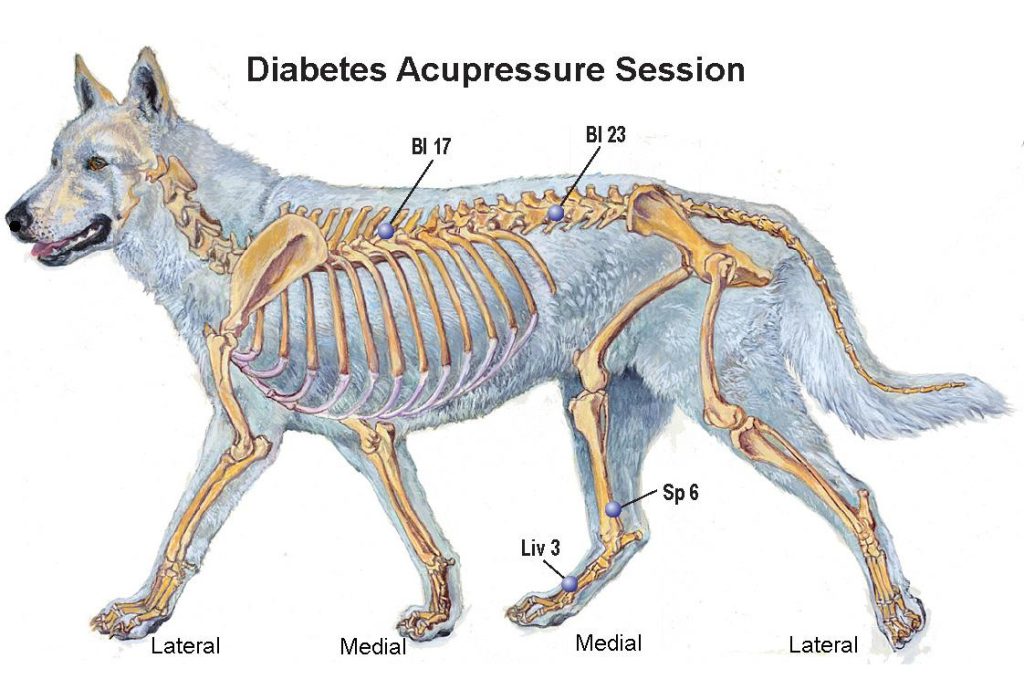
Bladder 17 (Bl 17) is the Influential point for blood. This acupoint’s energetic action regulates and invigorates blood. Bladder 17 is located lateral to the seventh thoracic vertebra. That is, feel for Bladder 17 just off the animal’s spine at the level of the seventh thoracic vertebra.
Bladder 23 (Bl 23) supports Kidney yin, which is the essential basis of the animal’s cellular health and physical constitution. This acupoint is directly connected to Kidney and can be found just lateral to (away from) the dog or cat’s spine between the second and third lumbar vertebrae.
Spleen 6 (Sp 6) enhances Spleen/Pancreas function in creating nutrient-rich blood and facilitates blood flow, while also benefiting Liver and Kidney chi (life-promoting energy). Spleen 6 is found above the medial malleolus on the caudal border of the tibia. Trace your fingers above the inside of the animal’s hock and press lightly against the tibia bone.
Liver 3 (Liv 3) removes toxins from blood, invigorates blood, and benefits metabolic disorders. Liver 3 is located on cats and dogs between the second and third metatarsal on the hind paws at the junction of the metatarsophalangeal joint. Draw your finger up between the metatarsals until you feel the joint, and that’s Liver 3.
After holding the acupoints on both sides of your favorite companion, take a few minutes to relax and enjoy each other’s company. These acupressure sessions go two ways, you are supporting your animal’s health and well-being, and your dog is offering his or her deep appreciation and ability to enjoy each other’s company for many more years.
Diabetes in our companion animals has reached epidemic proportions. Luckily, diabetic dogs can live long and almost normal lives. There may not be a cure for diabetes mellitus, but there are tried and true treatment options your holistic veterinarian and complementary therapy provider can offer. Acupressure Practitioners can help you support your dog’s health.
Amy Snow and Nancy Zidonis are the authors of ACU-DOG: A Guide to Canine Acupressure, ACU-CAT: A Guide to Feline Acupressure, and ACU-HORSE: A Guide to Equine Acupressure. They founded Tallgrass Animal Acupressure Resources, which offers books, manuals, online training courses, DVDs, apps, meridian charts, consulting, and many more acupressure learning tools and opportunities. Email: tallgrass@animalacupressure.com, Website: https://www.animalacupressure.com/


