
The “Loose Leash” Reflex: Why Force Always Creates Resistance
By iKE ALLEN, Happy Healthy Dog Co-Founder
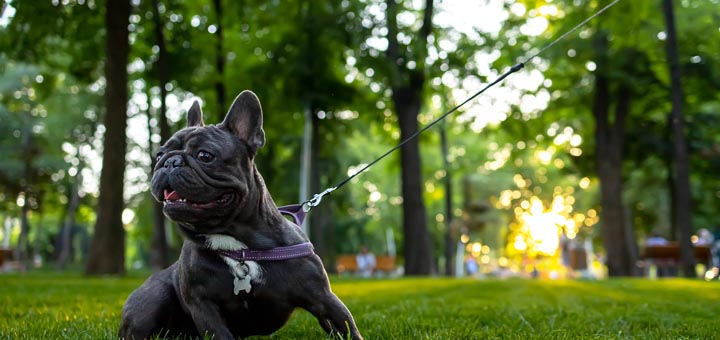
We’ve all seen it (or felt it): a dog is pulling ahead on the leash, so the owner instinctively yanks back. What does the dog do? They lean forward and pull even harder.
In the dog training world, we call this the Opposition Reflex. It’s a physical, biological instinct. If you push against a dog’s shoulders, they push back against your hand. If you pull their tail, they pull away. The more tension you put into the leash, the more tension they put into their neck. By trying to “force” them to walk nicely, we actually trigger the exact behavior we’re trying to stop.
The Dog Education: The Power of the Loose Lead
The secret to a dog that walks with you isn’t a stronger arm; it’s a loose leash. When the leash goes slack, the opposition reflex turns off. The dog no longer feels like they are in a tug-of-war, which allows them to actually listen to your cues. You gain cooperation by dropping the tension, not by increasing it.
The ReThink Pivot: The “Iron Fist” vs. The Community
I saw this same biological reflex constantly during my days as a corporate restaurant trainer. I’d often be sent in to “tune up” a struggling location, and almost every time, I’d find a management team ruling with an iron fist.
They thought that by “yanking the leash”—using micromanagement, harsh criticism, and rigid control—they could force the staff to perform better. If you’ve ever worked in the restaurant business, you know that most employees feel a deep sense of autonomy; they often view themselves as hybrid entrepreneurs who “own” their specific station or section.
When a manager tries to “force” those individuals through rigid control, they don’t just get compliance—they get the Opposition Reflex. Just like the dog at the end of the leash, the staff instinctively pulled back. They became resentful, resistant, and did the bare minimum just to survive the shift because their sense of ownership had been stripped away.
Using the ReThink Method allows us to realize the most important “Good job!” is the one that comes from inside. When you stop trying to force others to meet your expectations and start validating your own ability to lead with empathy, the “leash” goes slack. You become a “self-rewarding” pup who understands that influence is infinitely more powerful than force.
The [ReThink] Tool: The Tension Drop
The next time you feel like you’re in a “tug-of-war” with a coworker, a partner, or even your dog, try this:
- Notice the Pull: Where are you currently trying to “force” a result? Feel the tension in your own body or your tone of voice.
- Drop the Leash: What would it look like to “slack the line” for a moment? Instead of a demand, try a question or a word of appreciation. (e.g., instead of “Do this now,” try “I really value your help on this, how can we make this work?”)
- Observe the Shift: When you stop pushing, does the other side stop pushing back? Notice how much more energy you have when you aren’t constantly pulling.
The Bottom Line
Force creates resistance; flow creates cooperation. Whether you’re holding a leash or leading a team, the goal is the same: to move together in the same direction.
If you want your dog—or your staff—to follow you, you have to give them a reason to want to be there. Drop the iron fist, loosen the leash, and watch how much faster you move when nobody is pulling back.


