
The Neurobiology of Trauma in Dogs 2.0
By Dr. Laura Donaldson, PhD, CDBC, KPA CTP.
Here in upstate New York (US), we are transitioning into late summer, bringing cooler nights, shorter days and the beginning of fall leaf turning. This period has also become the “Season of Neurobiology” for me—more specifically, the season of neurobiology and trauma in dogs. This is because over the next several months, I am giving multiple talks and presentations focusing on the neurobiology of canine trauma. This is such an important topic because the more we understand about traumatic stress, the better able we are to support and facilitate healing in canine as well as human survivors. You might remember my February Happy, Healthy Dog article on this topic, which featured the disorganized brain wave patterns of traumatized subjects re-experiencing a flashback. Its statement that “sustained, elevated levels of adrenalin/noradrenalin can damage cognition, intensify hypervigilance and render subjects unable to distinguish safety from danger (D’Anniballe, 2016) moved at least one reader to confess, “this sentence was really powerful for me in separating my own emotional response to behavior. I think it’s too easy to see something as `bad behavior’ or `being stubborn/difficult’.”
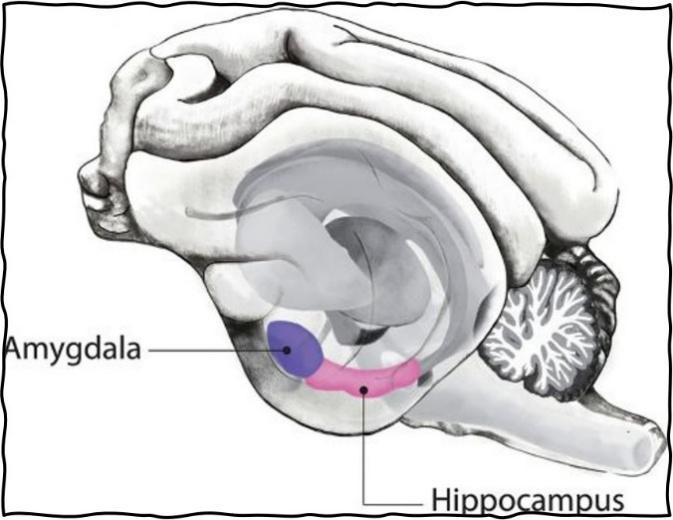
Canine Hippocampus
Another way that trauma often exerts devastating effects on dogs is through the HIPPOCAMPUS. In both humans and dogs, the hippocampus—so named because of its physical resemblance to a sea horse—is responsible for what is called memory consolidation. It creates short-term memories from the raw data of a subject’s experience and then determines which memories are converted into long-term storage. The hippocampus imbues events with time and space. It contextualizes memories and enables subjects to remember them within the specifics of an individual history. According to psychotherapist and trauma specialist Babette Rothschild (2000), “hippocampal processing gives events a beginning, a middle, and an end.” However, unprocessed remnants of trauma not only activate excessive and sustained levels of stress neurochemicals like adrenaline and cortisol but also suppress the contextualizing work of the hippocampus. As Rothschild notes, this suppression of hippocampal context “is very important in regard to chronic traumatic stress since it creates the sense that the trauma has not yet ended.” This is how traumatic memories can continuously invade a subject’s present cognitive-emotional state rather than being contained securely in their past: “The perception of the event as being over and the victim as having survived is missing (Rothschild, 2000).” This hippocampal atrophy represents a profoundly significant obstacle in any subject’s healing from trauma.
One takeaway from learning about such damaging neurobiological effects is that addressing any difficult behaviors that emerge from canine trauma requires a deep integration of trauma’s somatic (body-based) reality. Living and collaborating with traumatized dogs (or humans) means thinking outside the conventional “training” or “behavior modification” box. It means listening to our dogs and always assuming they are doing the best they can with the coping skills they have developed for survival. And of course, it means keeping the canine faith rather than assigning toxic labels like “naughty” or “stubborn” to our dogs.
NOTE: If you are interested in learning more about “outside the box” approaches for trauma, I recommend checking out my online “Somatic Self-Resilience for Worried and Traumatized Dogs” course (currently open for enrollment) and my presentation for the Pet Professional Guild’s “Brain Train” conference (happening November 10th through the 14th). I am copying registration/information links for each of these below and hope to see you there. Peace, Love and Neurobiological Literacy ☮️💝🐾!
References
D’Anniballe, Janine. (2016). Why survivors of trauma feel and act the way they do: understanding the neurobiology of trauma. NAMI National Convention, Denver CO.
Rothschild, B. (2000). The body remembers: the psychophysiology of trauma and trauma treatment. W.W. Norton & Co.
Dr. Laura Donaldson, PhD, is a Professor Emeritus from Cornell University located Ithaca, New York, United States. She is an award-winning writer on dog behavior who has worked as a canine behavior specialist for 20 years. Laura is a Certified Dog Behavior Consultant (CDBC/IAABC) and a Karen Pryor Certified Training Partner (KPA CTP). She is also a Certified Trauma Professional. She created the very popular program, Slow Thinking is Lifesaving for Dogs® and given a number of online webinars as well as conference presentations. Laura currently lives in upstate New York (northeastern US) with her husband, working Border Collies, three cats, an African Gray parrot named Obi and a small flock of Navajo Churro sheep. https://fourpawsfourdirections.com


