
Maya’s Journey: Helping Dogs Overcome Anxiety on the Path to Pet Wellness

By Jeff Feinman, VMD, CVH.
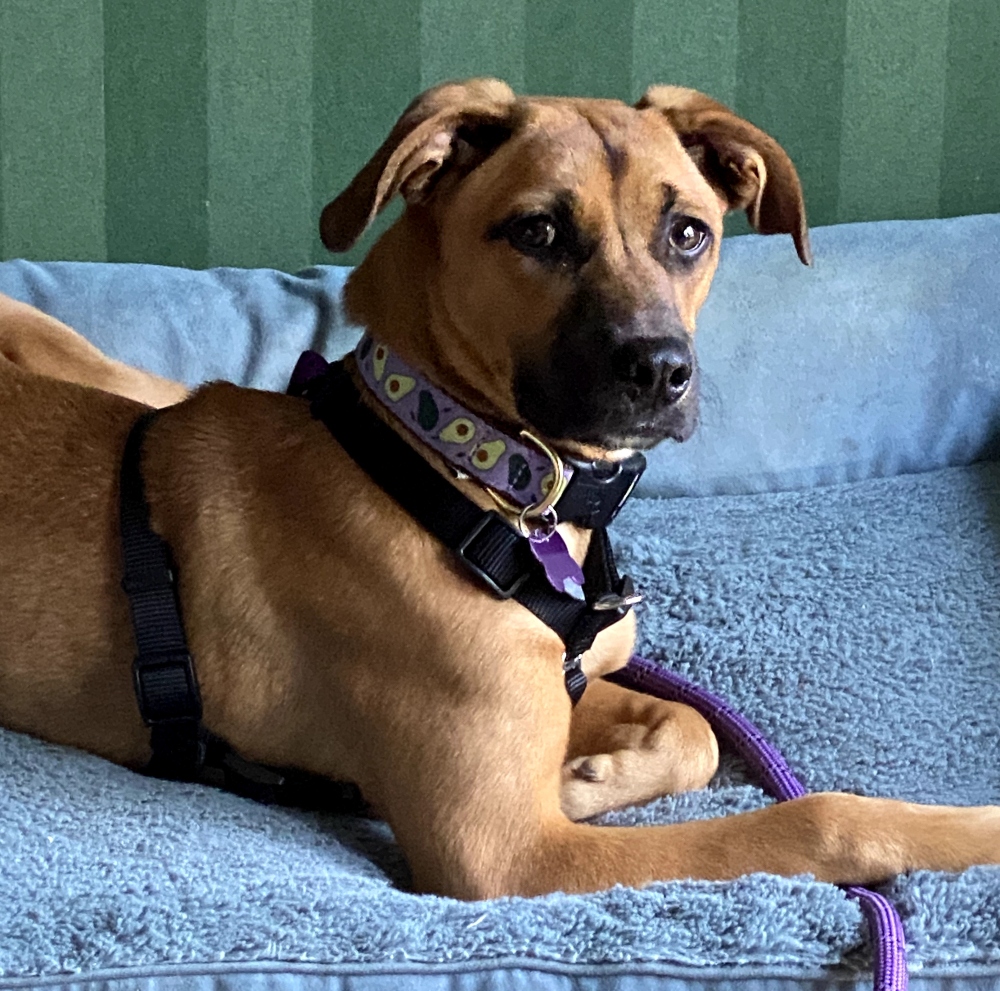
When I rescued Maya in November 2024, she was far more than just a bundle of nerves—she was a testament to how early medical interventions and environmental stressors can affect a dog’s entire being. Born in a shelter in Tennessee, Maya had endured a whirlwind of medical procedures before she even had a chance to develop naturally. By 12 weeks of age, she had already received all her shots, a rabies vaccination, treatments with multiple drugs for infections, worms, and Giardia, plus a spay surgery. Her little body and developing nervous system had no time to process these interventions or find balance.
By the time I met her at Adopt A Dog in Armonk, NY, Maya was a super-scared 16-week-old pup who had never experienced the comfort of a home. The simplest things that many dogs take for granted—walking through doorways, climbing stairs, or strolling down a street—terrified her. Everything in the world seemed threatening to this little soul who had known nothing but medical procedures and shelter life.
Understanding Maya’s Anxiety: More Than Just “Fear”
What many would label as “behavioral problems” or “extreme fearfulness,” I recognized as Maya’s honest communication about her internal state. This is the essence of the “Trust the Truth” method—believing that our dogs’ bodies and behaviors are sharing valuable information, not malfunctioning or being difficult.
“When a puppy experiences so many medical interventions before their nervous system has fully developed, it creates a perfect storm for anxiety,” explains veterinary behaviorist Dr. Sarah Thompson. “Their bodies are literally telling the truth about feeling unsafe and overwhelmed.”
This perspective shift was crucial for Maya’s healing. Instead of trying to “fix” her behaviors, I began listening to what they revealed about her internal experience. Her reluctance to walk through doorways wasn’t stubbornness—it was her nervous system saying, “I don’t feel safe with transitions.” Her fear of the street wasn’t irrational—it was her body remembering that new environments had historically meant more stress and medical procedures.
The Path to Pet Wellness Approach
Rather than pushing Maya to “get over” her fears, I embraced the Path to Pet Wellness framework—treating her as the miraculous being designed to rebalance with the right support. Here’s how this approach transformed a terrified shelter puppy into a confident, joyful companion:
Conscious Compassionate Communication
Communication with Maya began with respect for her truth. When she showed signs of fear, I didn’t dismiss them or force her forward. Instead, I acknowledged her feelings and explained what was going on while gently showing her alternatives.
For those first weeks, we practiced approaching doorways without pressure, celebrating even the tiniest steps forward. I would sit near a doorway reading a book, occasionally tossing treats closer to the threshold. Maya learned that doorways could be places of good things rather than scary transitions.
“Animals respond remarkably when we communicate with respect for their experiences,” notes animal communicator Jamie Richards. “They’re not trying to be difficult—they’re trying to feel safe in a world that hasn’t always been kind to them.”
Love Therapy and Teaching Trust
Maya’s early experiences taught her that the world was unpredictable and often uncomfortable. Rebuilding her trust required consistent demonstrations that life could be different.
Each day included dedicated sessions of what I call “love therapy”—quiet moments where Maya received gentle touch and affirmation without any expectations. These weren’t training sessions but rather opportunities for her to experience unconditional positive regard.
Trust-building exercises were broken down into micro-steps. Rather than expecting her to immediately handle a walk down a busy street, we started in our backyard. Then the driveway. Then just the first few feet of our quiet street. Each successful experience built her confidence and showed her that I would never rush her beyond her comfort zone.
A few of the specific actions I used to help Maya feel safe and learn to trust were:
- Being present with her and using a soothing tone
- Engaging with her by watching her and using her name
- Respecting her choices within safe boundaries
- Positioning myself between Maya and potential threats (people/cars)
- Narrating and explaining what’s happening around her
- Using calming “grounding” techniques and verbal reassurance
- Using a harness instead of a collar to support vagus nerve function
- Associating the word “relax” with her lying down quietly
- Practicing slow, deep breathing together
Working With Her Body in All Ways
Maya’s anxiety wasn’t just “in her head”—it lived in her entire physical system. The multiple medical interventions she experienced had created imbalances that needed addressing:
- Nutritional support: I introduced fresh and raw foods and probiotics to support her gut-brain connection, recognizing that many shelter dogs have disrupted microbiomes that affect emotional regulation.
- Homeopathic medicines (aka remedies): I identified remedies matched to Maya’s symptoms including her particular anxiety patterns. The gentle approach of homeopathy helped restore balance without side effects.
- Physical grounding: Daily routines included activities that naturally discharge stress and promote sensory integration—digging in safe spots, exploring various surfaces, and engaging her natural sniffing abilities.
Maya’s Transformation: From Fearful to Flourishing
The results of this approach speak for themselves. Today, at nine months old, Maya is a wonderfully happy young dog who loves her walks, plays joyfully with other dogs and cats, and contentedly lounges under trees—a picture of canine bliss that seemed impossible when I first met that trembling puppy at the shelter.
The transformation didn’t happen overnight. There were setbacks and plateaus. But by consistently trusting the truth of what Maya’s body and behavior were telling me, and responding with the Path to Pet Wellness framework, we created the conditions for her natural resilience to emerge.
What makes this approach different from traditional training is its fundamental respect for the dog’s experience. Instead of trying to extinguish “problem behaviors,” we address the underlying causes and create an environment where the dog can heal from the inside out.
Lessons from Maya’s Journey
Maya’s story offers valuable insights for anyone living with an anxious dog:
- Trust what your dog is telling you. If they seem afraid, they are afraid—and that fear makes sense given their history and biology.
- Address the whole being. Anxiety isn’t just a behavioral issue but involves nutrition, gut health, early experiences, and energy balance.
- Break healing into tiny steps. Maya didn’t go from terrified to confident in one leap—it happened through hundreds of small positive experiences.
- Celebrate all progress. The day Maya first voluntarily walked through a doorway, we had a little party. Acknowledging these milestones reinforces the path forward.
- Remember that balance is the goal. Rather than forcing “normal” behavior, focus on helping your dog find their own internal balance and regulation.
Today, when I watch Maya confidently exploring the world, playing, and resting peacefully, I’m reminded of the incredible resilience animals possess when given the proper support. Her journey from a frightened shelter puppy to a joyful companion wasn’t about training away fear—it was about honoring her truth while showing her a new way to experience the world.
The Path to Pet Wellness framework—with its emphasis on Conscious Compassionate Communication, Love Therapy, the Happiness Protocol, trust-building, and holistic physical support—doesn’t just manage anxiety symptoms. It creates the conditions for true healing and transformation. Maya’s story isn’t exceptional—it’s what becomes possible when we truly listen to our dogs and honor what they’re telling us about their experience.
For every anxious dog, there is hope. Not through forcing or fixing, but through understanding, patience, and a wholehearted commitment to supporting their journey back to balance.
Jeff is a graduate of, and University Scholar from, the University of Pennsylvania. He is the founder of the Holistic Actions! (HA!) online platform where he helps empower pet parents to develop a deeper relationship with their pets and nurture their health and wellness journey. He teaches the methods of this path in his upcoming book “Path to Pet Wellness”. https://www.holisticactions.com/


