
Acupressure Help For Side-Effects of Cancer Treatments
By Amy Snow & Nancy Zidonis, Tallgrass Animal Acupressure Resources.
Our dogs are so sweet and innocent. It’s so difficult to subject them to medical treatments that save their lives. Having to watch and participate in taking your beloved animal for chemotherapy is distressing because you know he is going to feel ill within a day or so for at least seven days. It’s a form of “tough love.”
Side-Effects
Common side-effects of cancer treatments usually include nausea and vomiting, possible loss of appetite, diarrhea or constipation, and fatigue. Veterinarians often suggest you not offer your dog or cat food and water for 12 hours after treatment, followed with only small amounts of water for at least a day, and then offering small amounts of food and water until your pet has recovered from the treatment.
Having to manage this process is heart-rending even though you know you are doing your best for him. We can have a sense of helplessness during this time. Consider being a strong partner in helping your animal survive the side-effects of cancer treatments by offering acupressure sessions.
Acupressure-Massage
Acupressure-massage has been used for centuries to help animals resolve gastrointestinal issues, enhance appetite, and deal with fatigue. There are specific acupressure points, also called “acupoints,” that have been used for thousands of years to support these animal health conditions. The acupoints that are selected for the acupressure-massage sessions in this article are focused on the side-effects of the treatments the animals are undergoing and not on the cancer itself. They will in no way interfere in the chemotherapy or affect the cancer.
Taking an integrated approach can benefit your dog’s general condition. Your holistic veterinarian can offer medications that mitigate the side-effects of chemotherapy. Consult and follow your veterinarian’s recommendations while taking an active role in caring for your animal.
Acupressure-massage is based on Traditional Chinese Medicine (TCM). From a Chinese medicine perspective there are different approaches depending on exactly what the dog is experiencing. Given that we can’t address each individual animal’s indicators, we can, however, provide general sessions to help with gastrointestinal problems, low energy, and, possibly most important, comforting.
Gastrointestinal Issues
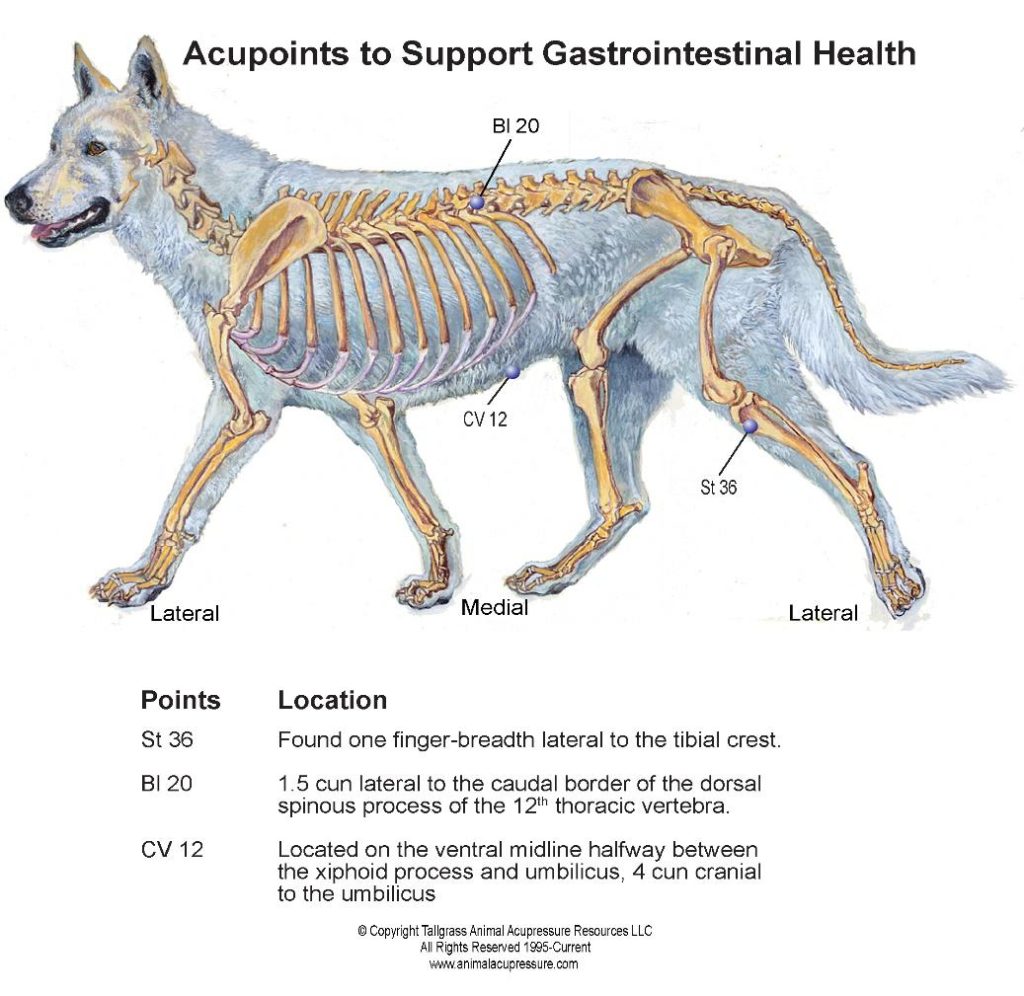
Signs of gastrointestinal (GI) discomfort are excessive drooling, eating grass, lip-sucking, regurgitating, and appetite loss. There are general acupoints that address GI upset. In TCM, the following acupoints commonly selected are:
- Stomach 36 – Master point for the GI tract
- Conception Vessel 12 – Regulates Stomach chi (life-promoting energy)
- Bladder 20 – Supports digestion
Low Energy
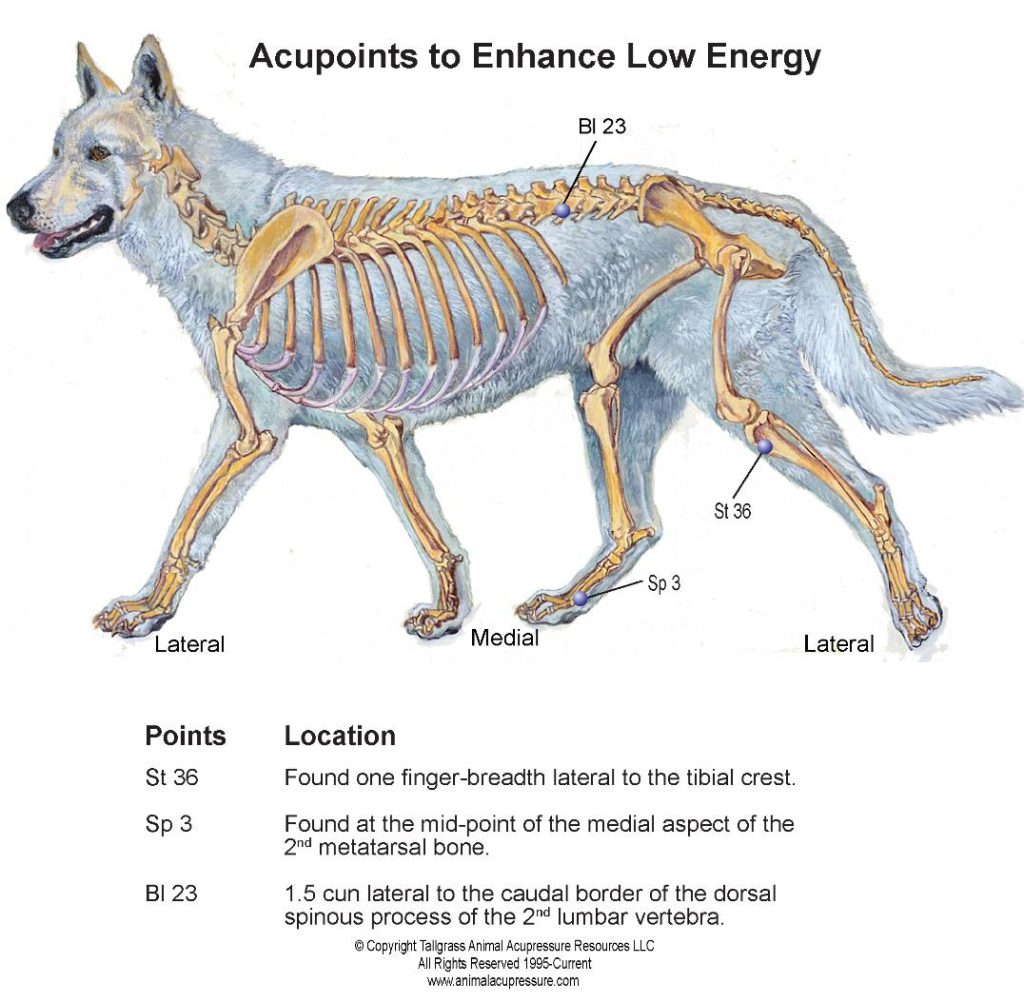
After a chemo treatment, fatigue and even deeper lethargy can set in. Dogs sleep a lot and are reluctant to do anything more than take care of their basic physical needs. An acupressure session can enhance the flow of chi while providing the animal with nourishing essence needed to increase energy. acupressure session chart are specifically selected to encourage the flow of chi and supporting activity.
Comforting Acupressure-Massage
Physical depletion during the treatment process is only part of what you and your beloved four-legged companion are experiencing. There’s a whole emotional realm that you have entered together. The emotional aspect of this process can be devastating. This is a time where you can be an “Emotional-Support Human” and bring comfort to your animal.
Comforting needs to have a soothing and a sense of deep-caring. There are techniques in acupressure-massage that can physically and psychologically communicate this level of comfort. Before beginning your session, think about how much you love and care about your dog. Your intention during the acupressure-massage session is to share how much you want him to heal. Your dog will feel your intention and it will help him heal physically and spiritually.
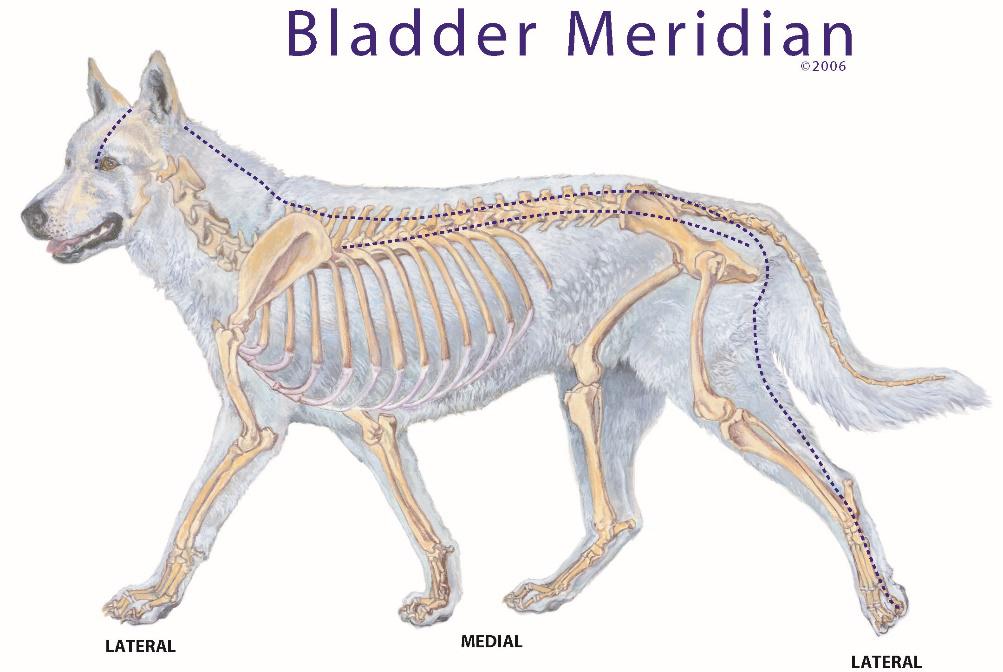
The chart above is the Bladder Meridian, which is just off the animal’s spine. Place the flat of your hand at about the middle of the animal’s neck and then slowly stroke down tracing the Bladder Meridian. For a small animal, use the “Two-Finger Technique” to trace the meridian shown in the photograph. Repeat this procedure on each side of your pet as many times as you and your dog wish.
POINT WORK TECHNIQUES
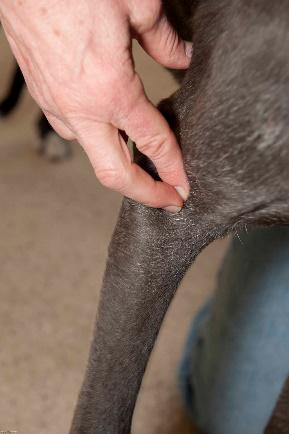
Rest one hand on your dog wherever it is comfortable. You are going to perform the Point Work with the other hand. Use either the thumb or two-finger technique depending on what is most comfortable for you.
- THUMB TECHNIQUE: Place the tip of your thumb directly on the acupressure point at a 45-degree angle and hold the point gently, but with intent, for a slow count to 20 or 30. This technique is best suited for the animal’s trunk.
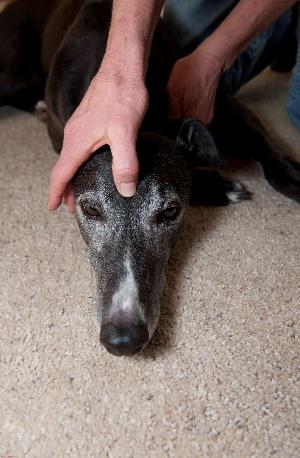
- TWO-FINGER TECHNIQUE:
Put your middle finger on top of your index finger and then place your index finger at a 45-degree angle gently, but with intentional firmness, directly on the acupressure point for a slow count to 30. This technique works well for small animals and along the extremities.
Amy Snow & Nancy Zidonis are the pioneers in animal acupressure-massage and the founders of Tallgrass Animal Acupressure Resources. They have written eight canine acupressure-related texts, an online training program, and meridian charts to help you provide optimal health for your dog. Website: https://www.animalacupressure.com/


Wonderful information concerning use of acupressure for canines. I’m going to try some of for my little dog who gets car-sick to see if it helps!